
Four Budget Burr Grinders for Espresso Beginners, Compared
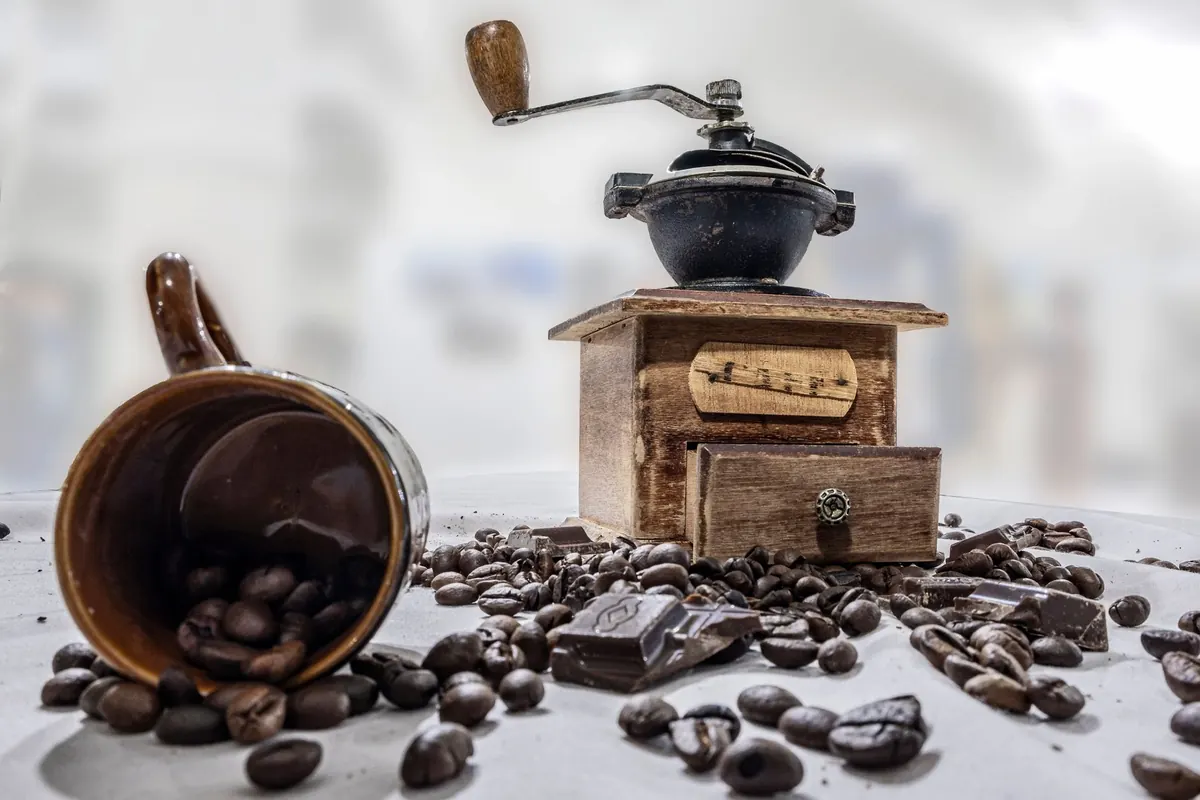
The pressurised basket that ships with most entry-level espresso machines is a small, useful lie. It forces crema out of stale pre-ground coffee, so the first weeks taste fine and nothing seems urgent. Then you fit a real basket, buy beans roasted last Tuesday, and the shots start swinging: sour, then bitter, then sour again, sometimes from the same bag on the same afternoon.
That swing is almost always the grinder. A burr grinder that holds a setting and moves in small, repeatable steps will do more for your espresso than a machine upgrade costing several times as much. These four are the ones worth a beginner's money — two electric all-rounders, one espresso specialist, and one hand grinder that quietly embarrasses them all.
What actually matters at this price
Nobody buys an entry-level grinder for the engineering. You are paying for a burr set that is aligned well enough, an adjustment mechanism fine enough for espresso, and a dose path that doesn't spray grounds across the counter every morning. Four things decide whether the thing is pleasant or infuriating to live with:
- Grind consistency. Water pushes through 18 grams of coffee in roughly 25 to 30 seconds, so small shifts in particle size move the flow a lot. Conical burrs at this price are usually good enough; flat burrs tend to give a narrower spread and a cleaner, more separated flavour.
- Noise. You will grind at six in the morning, probably in a flat with thin walls. A high-pitched whine is a real domestic problem, not a spec-sheet detail.
- Static. In dry winter air, fine grounds cling to plastic and land everywhere but the basket. It looks like a minor annoyance until it is your kitchen every day.
- Ease of dialling in. Stepped or stepless, numbered or blank, low retention or a chute that hoards yesterday's coffee. This is the part beginners underestimate and regret.
The four, compared
Baratza Encore ESP — the forgiving all-rounder
The safest first purchase of the group. Baratza took the long-running Encore and split the dial into two ranges, with a run of small steps reserved for espresso and the rest for filter. That resolution is what matters: enough to shift a shot by two or three seconds without leaping past the sweet spot entirely.
The 40mm conical burrs will not win a blind tasting against a specialist flat burr, but they are consistent enough that a beginner can taste a 15-second gusher next to a 32-second shot and understand what happened. It also doses neatly into a cup and handles single doses without drama, which is more than some grinders twice the size manage.
Two gripes. It is loud — a buzzy, plasticky tone rather than a rumble. And static is the weak point: in a dry kitchen the plastic bin collects a fine dusting that ends up on the worktop the moment you open it. Let the motor run a second after the beans finish, and add a single drop of water to the dose before grinding. Both are free and both work.
Fellow Opus — the tidy one
The Opus is the pick if you drink filter coffee on weekdays and espresso at weekends. Forty-one outer settings plus an inner ring for finer work covers everything from a V60 to a ristretto, and the design has clearly been thought about by people who hate sweeping up.
Static is genuinely low here. Grounds drop into the catch cup as a loose, matte pile instead of climbing the walls, and the noise is a lower, less grating note than the Encore's, even though it isn't quiet.
The catch is that inner ring. Adjusting it means taking the hopper off, which is a two-minute job — fine once a week when you open a new bag, tedious if you switch between brew methods twice a day. Dialling in for espresso on the outer ring alone is doable, but you will sometimes want the finer increment and have to go and fetch it.
Eureka Mignon Manuale — the espresso specialist
Flat 50mm burrs, stepless adjustment, and a build that feels a class above the other three. The Mignon range is designed around espresso, and it shows: the grind is consistent, the motor is unfussed, and the shots come out with a little more clarity than the conical grinders manage.
It is also the quietest of the electric three by a distance — a low, soft hum you could grind through while someone is on a call in the next room. Static is modest; the small annoyance is retention in the chute, so the first dose of the morning carries a gram of yesterday's coffee. A quick stir with a needle or a paperclip before you tamp sorts the clumps.
The adjustment knob has no numbers, which is the one thing that trips up beginners. Stepless means you can always find the right setting, and you can also lose it. Put a pencil mark or a strip of tape on the collar as a reference point, and move in eighth-of-a-turn nudges rather than big twists.
1Zpresso JX-Pro — the hand grinder that undercuts them all
A hand grinder belongs in this comparison because, gram for gram, it beats every electric model here on grind quality. The 48mm conical burrs are excellent, and the numbered dial with fine clicks per rotation makes dialling in almost trivially repeatable: the setting is a number you can write down and return to next week.
It is silent, it has essentially no static problem, and a light tap empties the catch cup cleanly. Grinding 18 grams for a double takes somewhere around half a minute of steady cranking — light roasts feel like actual work, and if you have wrist or shoulder trouble it is the wrong tool.
What you give up is convenience. You cannot walk away while it runs, you cannot grind for six people in a hurry, and the ritual of cranking at seven in the morning is either charming or a chore depending on your temperament.
Dialling in any of them: the same five steps
- Start coarser than you think. A too-fast shot tells you something; a choked machine tells you nothing and wastes coffee.
- Fix the dose. Weigh the same amount into the basket every time — 18 grams is a common starting point for a double. Change one variable at a time.
- Weigh the output. A 1:2 ratio in roughly 25 to 30 seconds is the usual target: 18 grams in, around 36 grams out.
- Move in small steps. Running fast means go finer, one or two clicks or an eighth of a turn; choking means go coarser. Grind, tamp, pull, taste, repeat.
- Trust your mouth over the clock. Sour and thin is under-extracted — finer. Harsh, drying and hollow is over-extracted — coarser.
A short buying note
If you only drink espresso and buy a bag at a time, the Mignon or the JX-Pro will reward you most. If filter coffee is part of your week, the Opus or the Encore ESP saves you from owning two grinders. If the budget is genuinely tight and you don't mind the cranking, the hand grinder is the best coffee per unit of money here, full stop.
Whatever you choose, buy fresh beans and buy them often — no grinder rescues coffee roasted eight months ago, and a mediocre grinder with good beans makes better espresso than the reverse. Prices and availability shift by region and season, so check current listings rather than trusting a figure you read somewhere. Then spend a fortnight pulling ordinary shots without changing three things at once. That fortnight, not the receipt, is what makes the coffee good.
Photo: Noureddine Belfethi / Pexels